


16 Oct A Brief Look at the Evolution of the Coffee Roaster
It is truly remarkable that people came to roast the seeds of a tree fruit and then drink them by filtering or steeping them in water.
Since that discovery, the way coffee is roasted has also gone through many changes. Shall we take a brief look at some key moments in the evolution of the roaster?
1. Pan Roasting
Coffee is a beverage with a long and rich history. The origins of roasted coffee date back centuries to Africa and the Middle East.
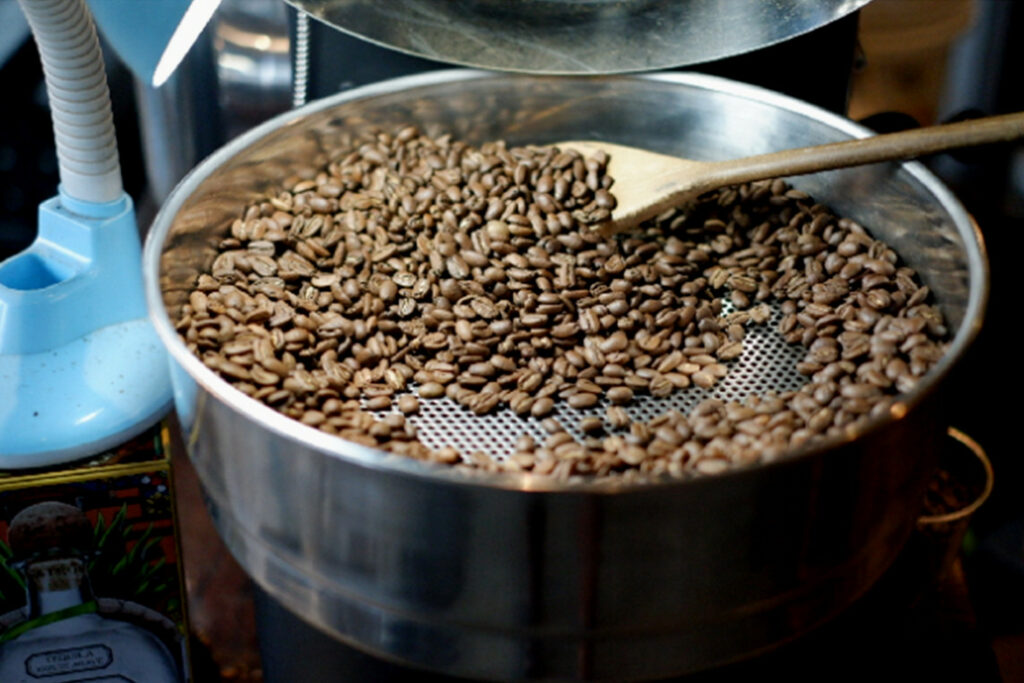
The first known roasting tool was a thin, perforated pan heated over an open flame.
The roaster would stir the beans with a long spoon while roasting. Only a small amount of coffee could be roasted at a time, and both the agitation and the results depended entirely on the roaster’s care and diligence.
Raimond Feil, an experienced roaster and the author of “Coffee Roasting Made Simple,” describes the experience of roasting coffee in a pot as follows: “It’s smoky and incredibly dusty. A lot of silverskin flies off, and the roast is not controlled at all.”
Because of these difficulties, coffee enthusiasts began to try new methods.

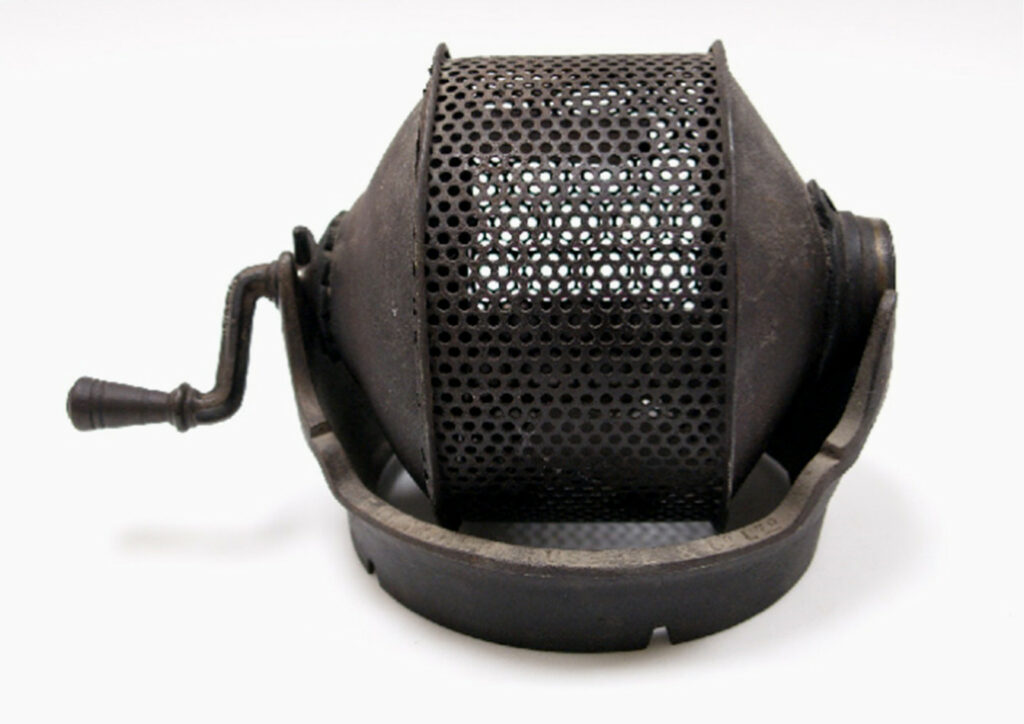
2. Cylindrical Coffee Roaster, a.k.a. the Hand-Mesh Roaster
The cylindrical roaster is believed to have originated in Cairo, Egypt, in the 17th century. Although it was operated manually, this device can be called a tremendous invention that brought innovation to agitation. Even if it tired the arm, it allowed even roasting and was far easier than using a pan.
The cylindrical design was modified over the years, but its basic concept remained consistent. As the coffee industry grew, the design was refined and some convenience features were added in Europe and the Americas.
3. Commercial Coffee Roasters
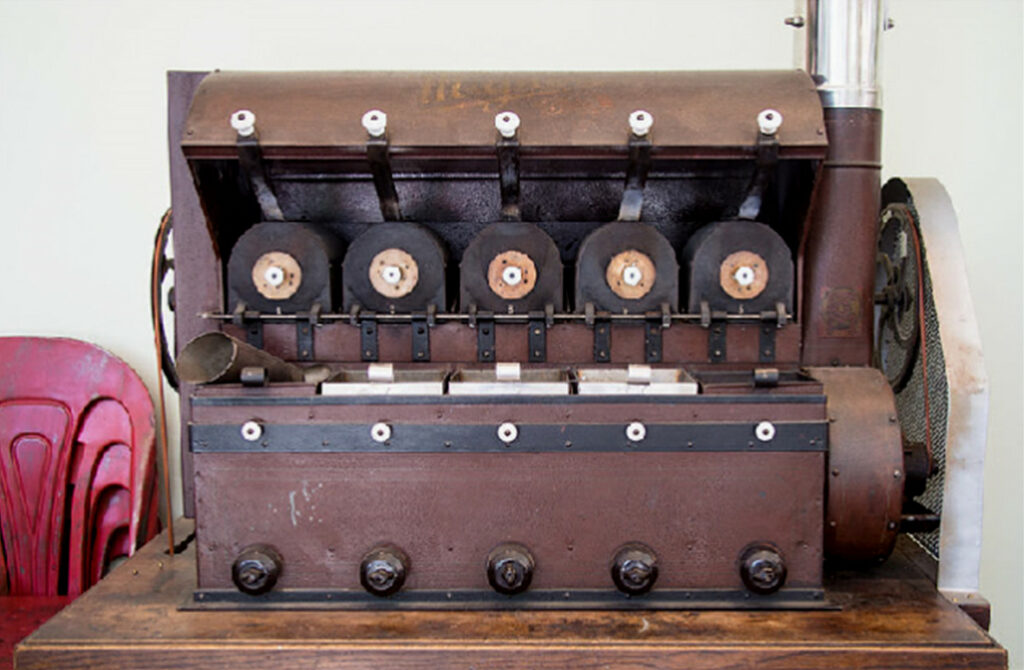
In step with industrialization, commercial roasters boomed in the United States and Europe in the 19th century.
Early industrial roasters were little more than a lid placed over a heat source. Because this was before gas supply became commonplace, the heat source was wood or coal.
According to the book “The Curious Barista’s Guide to Coffee,” James Carter of Boston patented the ‘Pull-Out’ roaster. It was an iron drum fixed in a furnace: the beans were roasted inside, then the entire drum was pulled out of the furnace and the coffee was dumped onto the floor through a door in the side wall to cool. It was a highly inefficient and dangerous method, but seen from today’s perspective, it was quite a curious attempt.
However, this approach did not last long. Once gas became available, gas-fired roasters began to lead a new era.
In 1864, in the United States, Jabez Burns received a patent for a commercial coffee roaster. Burns’s design was an enclosed cylinder surrounded by brick. It was characterized by a mechanism that discharged the beans without removing the cylinder itself from the heat source, and by internal double agitation that mixed the beans evenly. These innovations improved roasting consistency, and roasting gradually became a less dangerous job.
Burns’s company later added a cooler connected to an exhaust fan at the front of the roaster. This invention eventually paved the way for the modern coffee roasters we commonly see today.
In 1868, in Germany, Alexius Van Gulpe, together with Theodor Von Gimborn and Johann Heinrich Lensing, founded the company that would later become Probat.
In 1880, they applied for a patent on the ‘Rapid Coffee Roaster’ and began to speak of the importance of developing the drum roaster.
4. Electric Coffee Roasters
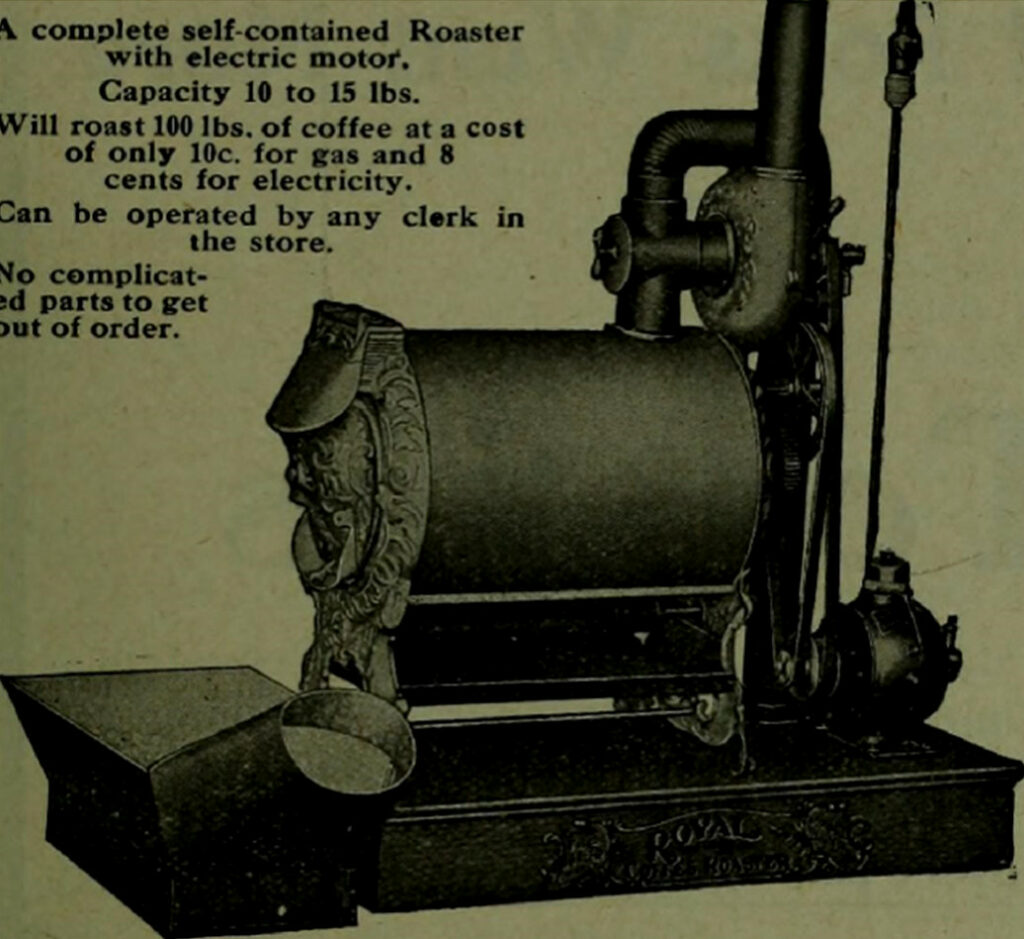
As access to electricity improved in the early 20th century, electric methods began to be devised for the coffee roasting industry.
Electric motors made roasting less labor-intensive, and because electric heat was more predictable than flame, roasting became more consistent and less dangerous. For the first time, this allowed roasters to control heat with only very slight manipulation.
5. Fluid-Bed Roasters
Drum roasters based on 19th-century patents still dominate today, but fluid-bed (or air) roasters emerged in the 1970s.
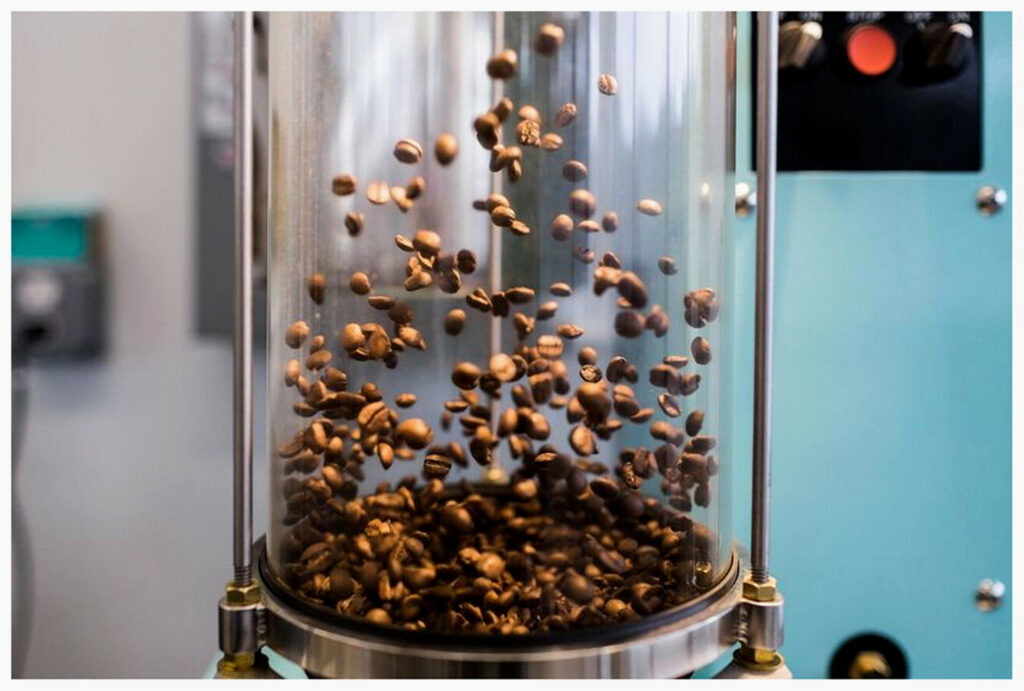
A fluid-bed roaster blasts hot air upward at a specific velocity so that the coffee beans stay suspended rather than being blown away, constantly moving and mixing with one another. Because the beans mix on their own, no agitation is needed; heat is exchanged mutually, and because the beans are heated directly, roasting time becomes extremely short. This fluid-bed roaster was developed and patented in 1976 by Michael Sivetz, an American chemical engineer.
6. What Method Will Be Devised Next?
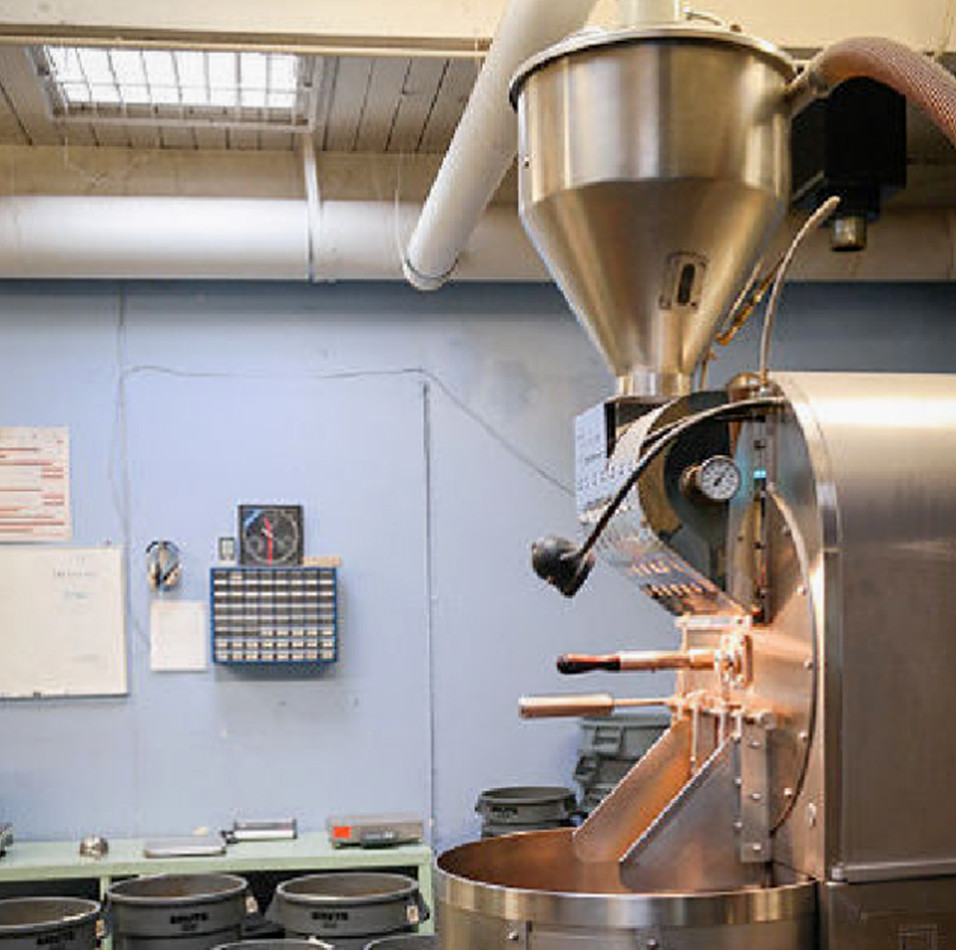
Today, our understanding of the chemical changes coffee undergoes during the roasting process is better than in the past, sensors for measuring variables and related technologies have advanced dramatically, and with profiling software and automated equipment, roasting is carried out far more efficiently and in batches.
Even so, these changes are still nothing more than fine-tuning of the 19th-century invention of the drum roaster.
So what kind of innovative technology and design might lead what comes next?
I am very curious to see what it will be.
No Comments