

28 Feb About Coffee Roaster Manufacturing Permits
I had not intended to write this post, but after some thought I decided that I should explain this at least once, so here it is.
It is about manufacturing permits and gas certification for roasters.
Even now, a few people still ask us about this, so I judged it would be best to settle the matter clearly, at least once.
I’d like to peel off this tiresome (?) label once and for all. Haha
Coffee roasters are regulated under Korean gas safety law, specifically the LPG Act (Liquefied Petroleum Gas Act).
The level of regulation under Korean gas safety law is arguably the strictest in the world.
This is because any violation makes you subject to criminal penalties, without exception.
Many roasters from around the world are currently on the market in Korea.
Besides Korean-made machines, there are European, Japanese, Turkish, Chinese, Vietnamese ones, and more. (Personally, I found the Israeli ones tempting.)
Under gas law, a roaster is classified as a large commercial combustion appliance, and the rules for it are defined and administered according to the KGS-AB338 code.
In addition, every roaster must obtain a manufacturing license and a design-stage inspection, and each individual finished machine must receive its own large commercial combustion appliance certificate.
For domestic machines:
A manufacturing license is naturally mandatory, and 51% of the manufacturing cost must be incurred in Korea before a machine can be stamped ‘Made in Korea.’
In other words, obtaining a manufacturing license and being Korean-made are completely different matters. ( <== I think this one sentence will be the answer for some people. )
So what about imported equipment?
Imported products broadly require two kinds of procedures.
The first is factory registration. This factory registration can cover the manufacturing license. (The design-stage inspection is separate.)
Because every roaster distributed in Korea must follow Korean gas law, staff from the Korea Gas Safety Corporation go to the factory located overseas to conduct an on-site audit, and if the factory is approved, it can be registered. If the factory’s location or details change, the factory registration must be done again.
Also, as far as I know, two Korea Gas Safety Corporation employees visit the factory every year for a re-audit. The manufacturer has to bear all of these costs.
It’s a staggering burden, isn’t it?
After that, the design-stage inspection must still be obtained separately for each type.
The second is the OEM method, like ours.
A roaster is not made up of gas components alone. Gas is just the part subject to gas law; a roaster also needs many other things, such as machining and electrical equipment.
In this case, the gas system can be covered by a manufacturing license obtained in Korea, because it is the part of the equipment governed only by the gas safety law.
The remaining parts that are unrelated to gas are then produced through OEM.
Even with this approach, the costs are not trivial, and the difficulty is extremely high.
Now let me explain the situation of SIEBENSTER, which many of our customers have asked about.
SIEBENSTER was founded in 2022, and at first we did not obtain a manufacturing license.
The reason was the exemption clause on design-stage inspections for imported goods.
To explain the exemption clause briefly, it provides that, for the same type, the design-stage inspection is waived for up to 3 units per year.
This includes purposes such as research and personal use, such as direct purchases from overseas.
However, the official interpretation of this clause differed from one regional headquarters to another.
That is because the wording is loose.
It comes down to how the ‘type model’ is defined.
At the Northern Gyeonggi branch, which we belong to, the type model was interpreted as the model name, so 3 units per model were permitted.
For that reason, in the early days we ran our business normally, within the permitted range, without any problem.
After all, our products were not big sellers.
Accordingly, it was possible to obtain certificates for individual machines only up to the set quantity.
But now????
In fact, this was the part that made me hesitate over whether to write this post at all.
The reason is that this provision changed starting in 2025.
As I mentioned, the official interpretation of the exemption clause used to differ from one regional headquarters to another, but now the Ministry of Trade, Industry and Energy has issued clear top-down guidance on the interpretation.
Why so suddenly?
(I am still uncomfortable going into the reasons in detail, so I will skip the details.)
Let’s just sum it up by saying that, in any field, competition among businesses of the same kind is fierce.
Personally, I think the lowest form of humor is making others look like fools in order to make yourself stand out.
In the same way, when promoting one’s own products, failing to appeal with what one has to offer,
and instead hoping to gain a relative advantage by putting down a competitor, strikes me as contemptible.
There were people who raised the issue through continual protests and inquiries about the gas safety law, and that is what changed the situation.
Something along the lines of, “Are you telling domestic companies to die? Are we fools?”
Honestly, I admit part of that.
If this had not been permitted when we started our business, we could not even have started. But it was carried out with the permission of the person in charge, and
since certificates were issued on a limited basis, only up to the set quantity, we have no qualms about it.
If anything, it is true that it turned out to be an opportunity.
Also, honestly, if you compare the unit costs of manufacturing in Korea and importing from abroad, domestic manufacturing is actually cheaper.
(I will write about this in a separate post.)
That is why I truly cannot understand the claim that companies manufacturing in Korea pay excessive costs or are at a disadvantage.
(The only thing that is expensive in Korea is labor costs. Everything else is much cheaper to make domestically. But labor costs are the heavy hitter… haha)
Back to the main topic.
Anyway, here is how the official interpretation changed as a result of the continual protests.
From 2025, in all regions, the type model of imported products is defined not by model but by the same product family.
Put simply, an importer that has not completed factory registration overseas can receive a design-stage inspection exemption for only 3 units per year.
In other words, it can sell only 3 units per year.
Personally, I have no objection to this.
If anything, I think it is more appropriate for research or personal-use purposes.
My only regret is that small businesses can no longer enter the market easily, and
it became clear that we, too, could no longer keep the business going unless we took action.
Fortunately, for reasons unrelated to this change in the official interpretation,
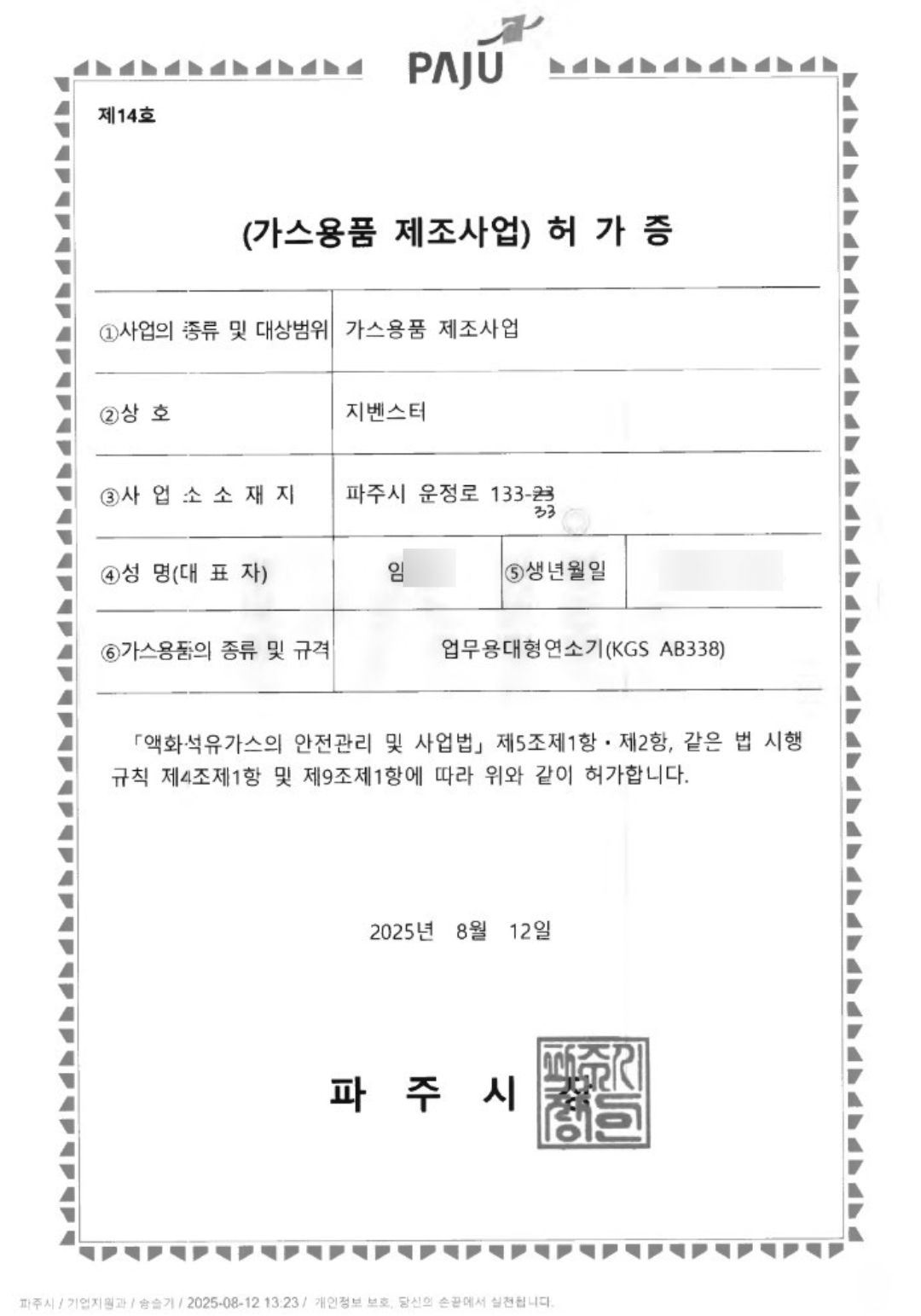
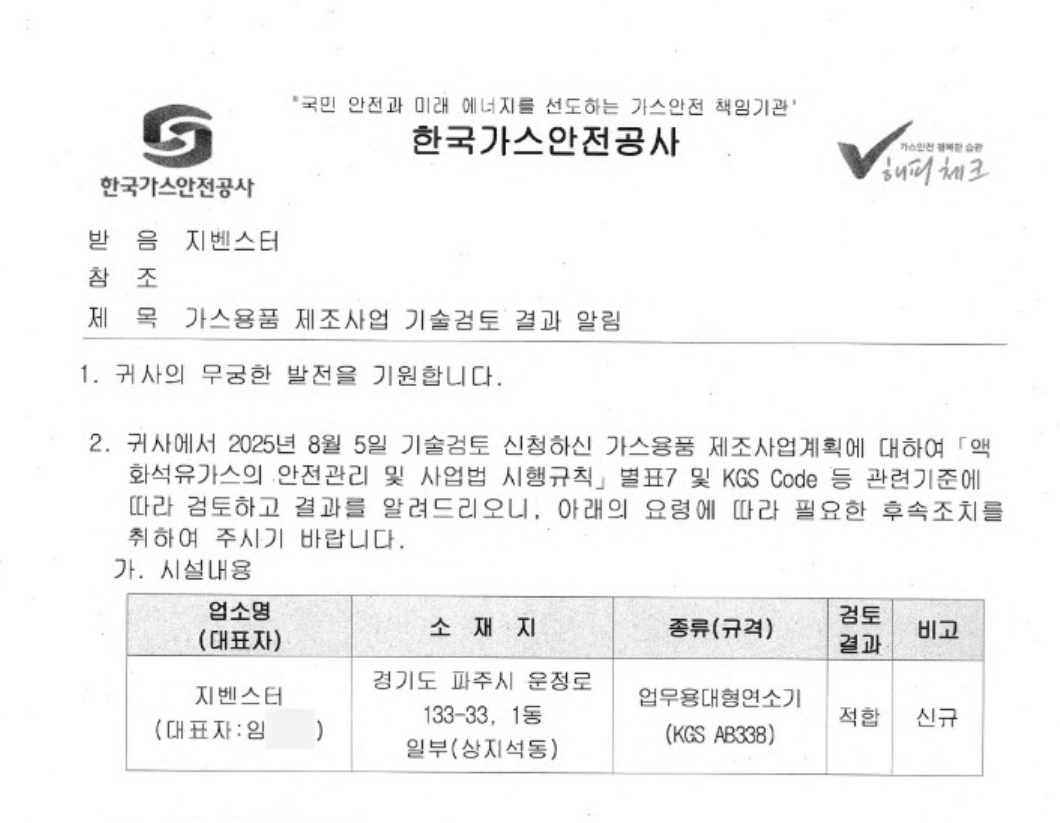
we began preparing for a manufacturing license in 2024 and have obtained the permit after a little more than a year.
Another reason was that we were simply tired of the many questions and attacks.
As things have turned out, I honestly feel that it has worked out well after all.
Thanks to having prepared in advance,
we are currently the only company that has properly obtained a Korean manufacturing license and is doing business with OEM production in Vietnam.
More may appear in the future, of course.
But I hope this post puts an end to any further misunderstanding and speculation.
No Comments