

28 Jan 2025 Coffee Business Closure Statistics: What Is the Alternative in a Polarized Coffee Market?
Executive Summary
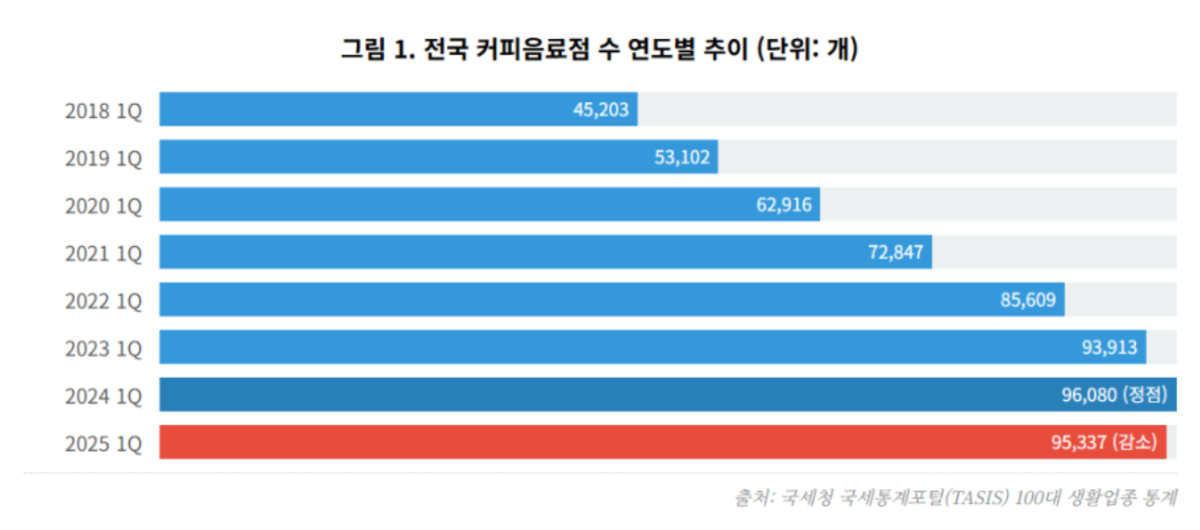
In 2025, the Korean cafe market reached a historic inflection point. For the first time since statistics began to be compiled, the number of coffee shops in Korea, which had kept growing for the past 20 years, has turned downward. As of Q1 2025, the number of coffee and beverage shops nationwide stood at 95,337, a decrease of 743 from the same period a year earlier. This stands in contrast to the explosive growth period of 2021, and it suggests that the ‘dead cross’ phenomenon, in which closures outnumber start-ups, is deepening. This article draws on reliable data from the National Tax Service, Statistics Korea, the Seoul Commercial District Analysis Service, and other sources to analyze the factors behind the crisis in the cafe industry and to present an outlook.1. The Growth and Stagnation of the ‘Coffee Republic’
South Korea’s coffee industry has expanded so rapidly over the past 20 years that the country is called the ‘Coffee Republic.’ According to Statistics Korea, the number of coffee shops nationwide passed 100,000 in 2022, long since overtaking the number of fried chicken restaurants. Since the second half of 2024, however, the market appears to have moved beyond saturation into overcrowding, and with the triple burden of high interest rates, high prices, and weakened consumer sentiment, restructuring appears to have begun across the industry. Let’s look at the quantitative changes in the market through the latest 2025 statistics.
2. Changes in the Number of Cafes by the Statistics (2018-2025)
According to the business registration data of the National Tax Service’s Tax Statistics Portal (TASIS), the number of coffee and beverage shops kept rising steadily even during the COVID-19 pandemic, but it peaked in 2024 and showed its first decline in 2025.
The number of shops, which stood at about 45,000 in 2018, more than doubled in just 6 years. Between 2021 and 2022 in particular, more than 10,000 net new shops opened each year, recording explosive growth. However, the Q1 2025 data shows a decrease of 743 compared with the same period last year, quantitatively demonstrating that the market’s expansion has reached its limit.
3. In-Depth Analysis: Start-Ups vs. Closures in 2024-2025
A more serious indicator than the simple decline in the number of shops is the reversal between the number of start-ups and the number of closures. Comparing the data for 2021 (growth period) and 2024 (downturn) shows how drastically the mood of the market has changed.
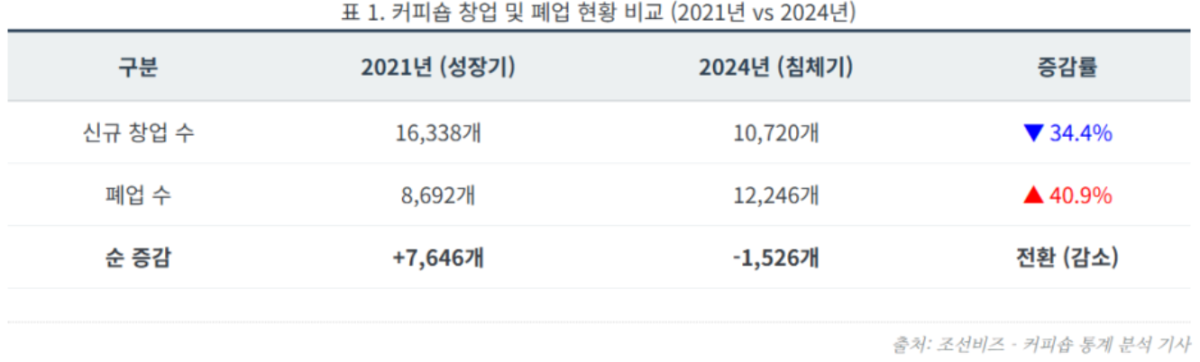
In 2021, start-ups outnumbered closures by nearly two to one, but in 2024, closures (12,246) overtook start-ups (10,720), recording a net decrease of 1,526. This shows that new entrants are declining while existing operators are leaving the market at an accelerating pace.
4. Survival Rate and Closure Rate
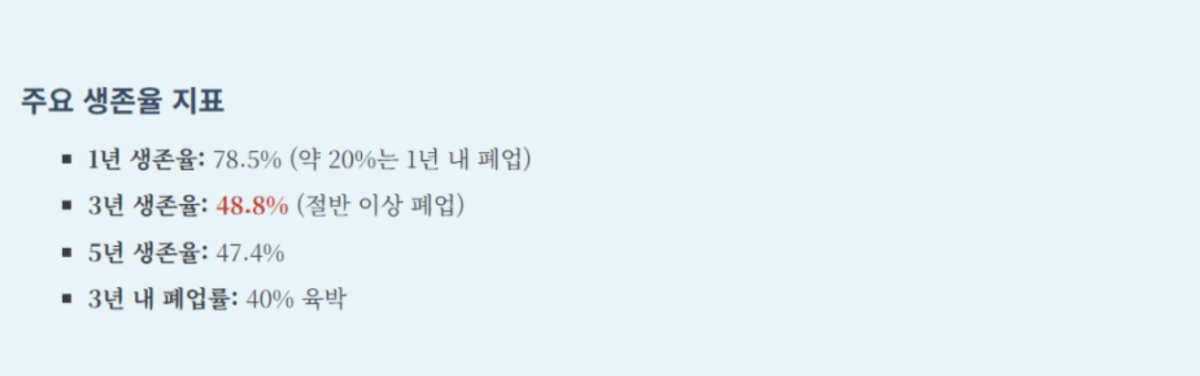
It is true that, because the barrier to entry for opening a cafe is low, the survival rate is also lower than in other industries. Taken together, the Seoul Commercial District Analysis Service and related data show the unfortunate reality that fewer than half of cafes survive three years after opening.
Quarterly Closure Rate Trend in Seoul
The data for Seoul, the center of consumption in South Korea, looks even more pessimistic. According to the Seoul Commercial District Analysis Service, the closure rate for cafes continues to rise.
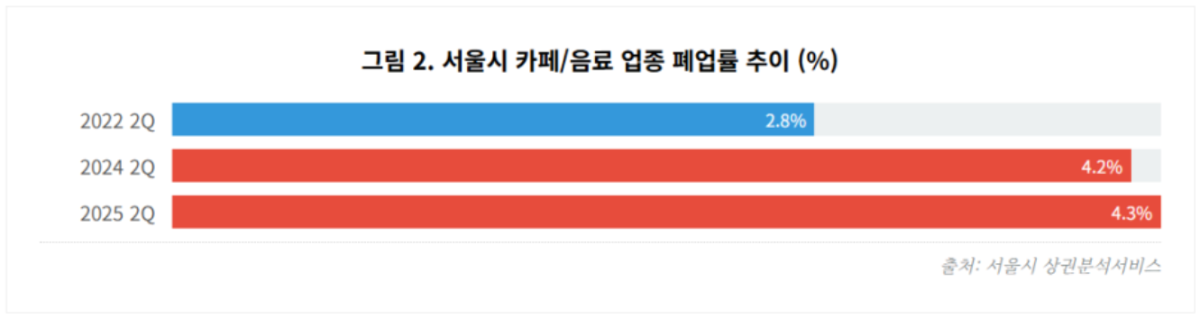
The closure rate, which stood at 2.8% in 2022, has soared to 4.3% in 2025. This means that competition within Seoul has reached an extreme, and the main cause is analyzed to be deteriorating profitability in major commercial districts with high rents.
5. Structural Causes of Rising Closures and Sales Trends
A. Extreme Market Saturation
As of 2022, the number of coffee shops nationwide reached 100,729 (Statistics Korea). That works out to roughly one cafe for every 500 people. The total coffee market in 2024 is estimated at about KRW 12 trillion, and with Starbucks holding a share of about 25%, it can be interpreted that a ‘red ocean’ structure has become entrenched, in which some 100,000 small and medium-sized cafes and low-price franchises compete for the remaining 75% of the market.
B. Decline in Small Business Sales (Economic Downturn)
The Q1 2025 small business trends report from Korea Credit Data (KCD) shows that sales declined across the food service industry owing to weak domestic demand.
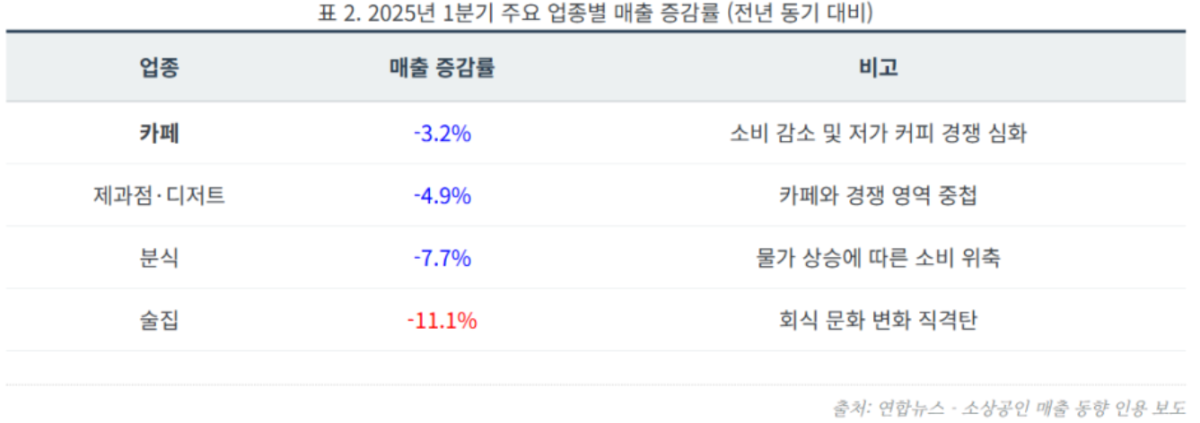
The sales decline for cafes (-3.2%) is relatively mild compared with that of bars (-11.1%) or snack-food restaurants (-7.7%), but given that the cafe sector already has low operating margins, a 3% drop in sales can be seen as a fatal blow to net profit. In addition, as cost pressures such as rising prices for roasted beans and milk continue, the business difficulties felt by owners are understood to be more severe than the figures suggest.
6. Conclusion and Outlook
The 2025 data show that the present state of the Korean cafe industry can be summarized as ‘the end of quantitative expansion’ and ‘the beginning of qualitative restructuring.’ The first decline in the number of shops in 20 years and closures overtaking start-ups are best interpreted as a structural change in the market, not a temporary fluctuation.
In the future, the market is likely to be reorganized around large franchises with capital and brand power and a small number of independent cafes with clear points of differentiation. In particular, the fact that the closure rate within three years is approaching 40% means that the formula ‘open a cafe after retirement’ is no longer valid. Prospective founders should approach location analysis and profitability review more conservatively, and existing operators will need survival strategies centered on cost reduction and securing loyal customers.
7. Alternatives
Based on the above, Korea’s cafe culture is no longer a blue-ocean sector; it has settled in as a kind of everyday infrastructure whose boom has ended. In addition, with quantitative growth over, a qualitative response appears urgently needed.
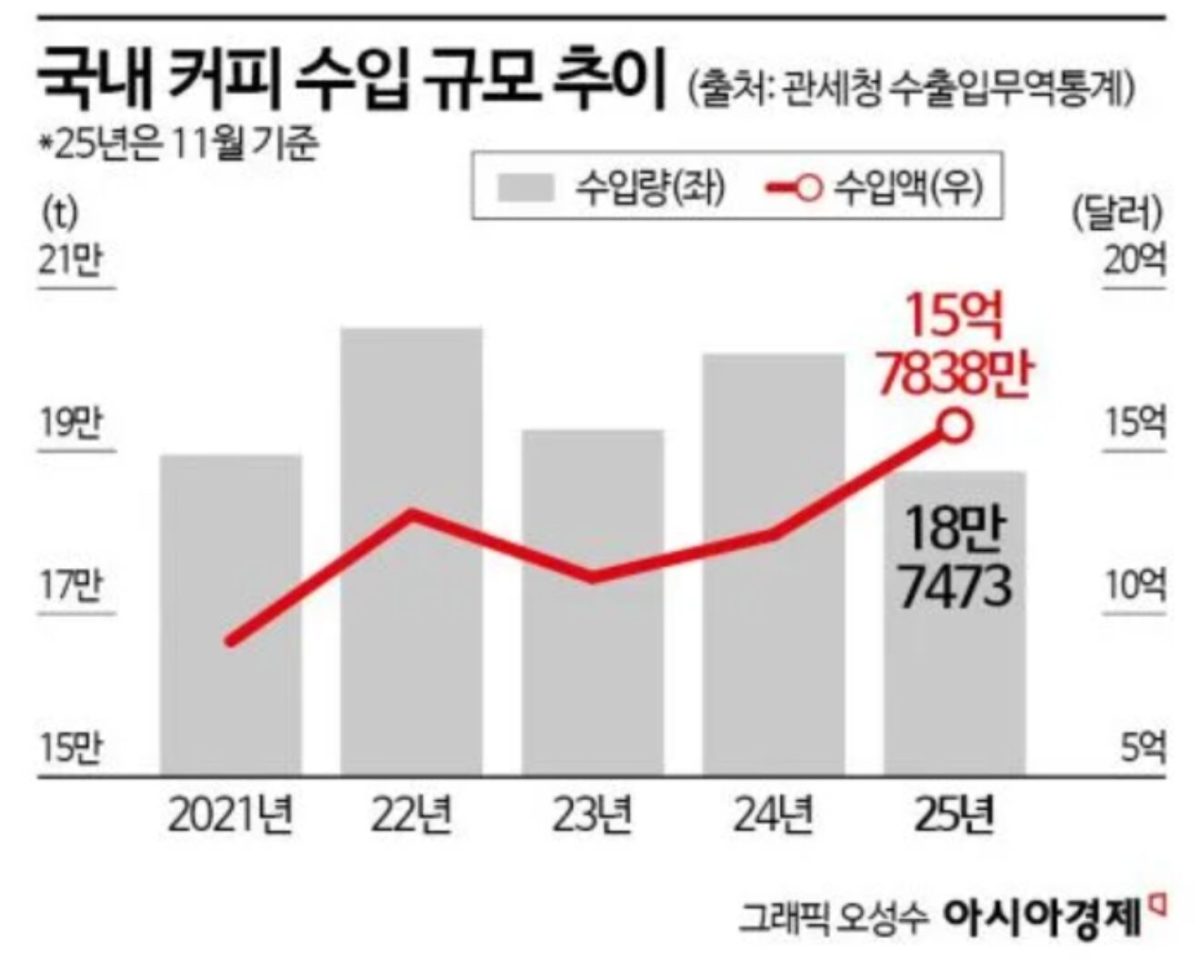
The table above shows that the volume of coffee imports in 2025 did not decrease significantly in quantity. However, owing to the surge in green coffee prices, the import value itself is at a record high. This shows that although Korea’s absolute consumption has not shrunk much, the number of cafes and suppliers is declining.
In other words, this suggests that the market is becoming polarized.
When a market polarizes like this, focusing on the essentials is the only good direction. It is something everyone knows, but the essence of the coffee industry is the sourcing of green coffee. This is because the raw material accounts for the largest share of differentiation.
In the Korean coffee market, where the low-price segment is already firmly established, the way to cut costs is not through raw materials but by reducing capital investment in equipment, which accounts for the largest share.
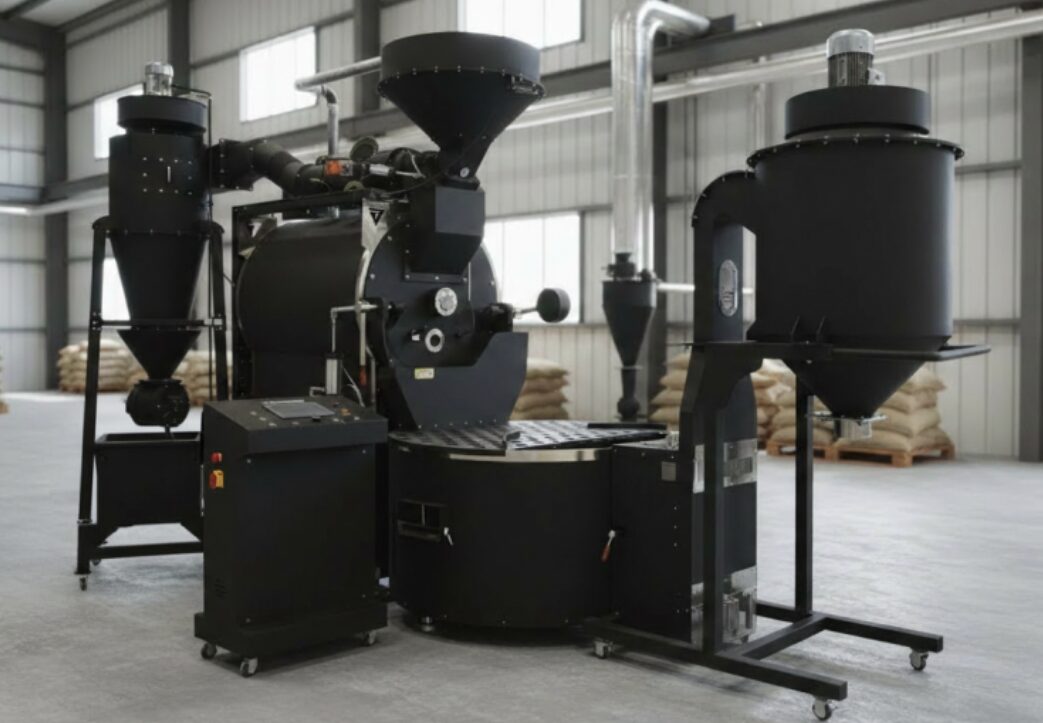
Although SIEBENSTER roasting machines are large-scale equipment, they are stable and come with fast after-sales service and, above all, a major advantage in capital investment cost.
The right way to cope with the polarized coffee market going forward is to achieve economies of scale at the same cost. Among the equipment suppliers you can trust and rely on, SIEBENSTER roasting machines are one option.
References: National Tax Service TASIS | Statistics Korea | Seoul Commercial District Analysis Service | Korea Business Review
No Comments