
06 Oct SIEBENSTER 30 kg Coffee Roaster Installation at Coffee Ground’s Main Branch
We have come to Coffee Ground’s main-branch roasting factory in Daegot, Gimpo.
On my first visit, I thought the GPS was sending me somewhere strange. It sits in the mountains, a little remote, and I wondered whether I had come to the wrong place…
It turned out I had passed up the good road and taken a roundabout, secluded route instead.
But once you arrive at the cafe-cum-factory, a whole different world opens up.
A wide site, a huuuuge parking lot, and above all, a truly wonderful cafe.
I’d love to build a cafe + factory like this myself. It’s just so ideal.
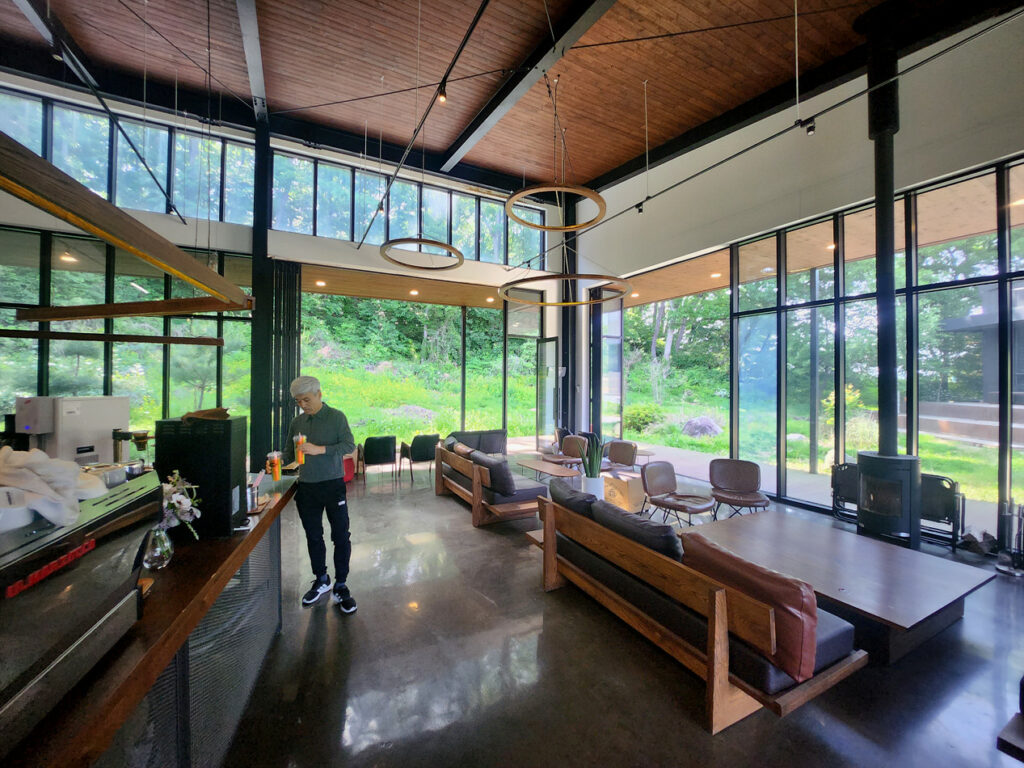
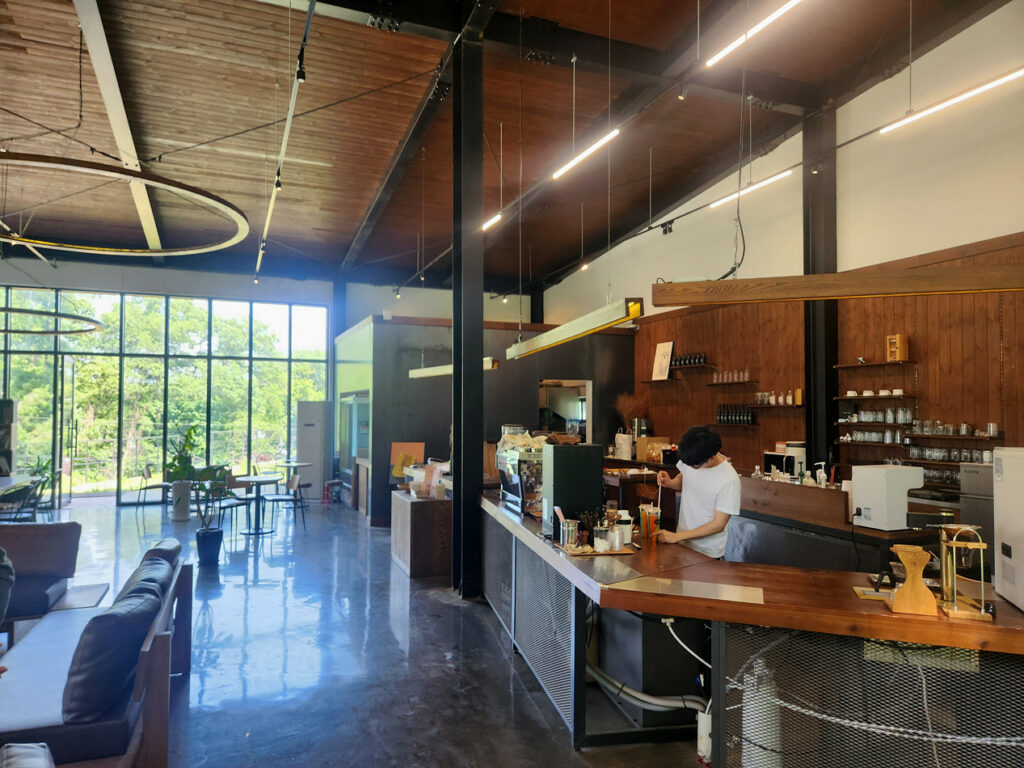
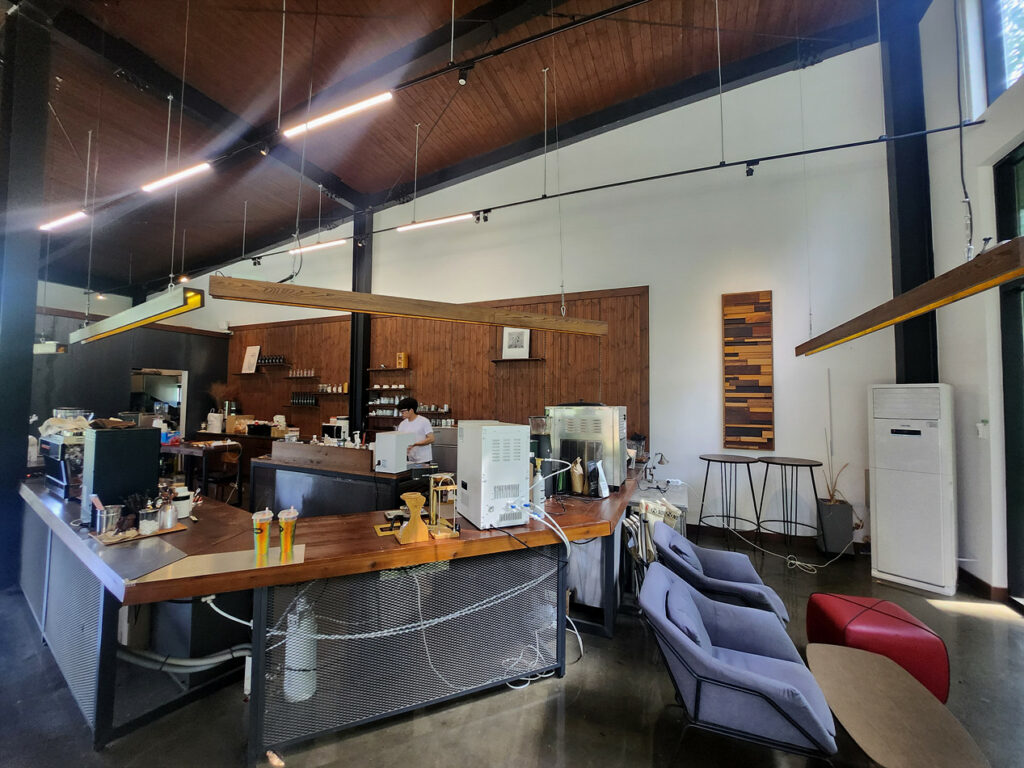
I was amazed that such a spacious, pleasant place exists in such a quiet spot, only a short way from Gurae New Town.
It’s the perfect place to visit when you want to step out of your daily routine and feel like you’re traveling.
However, the CEO told us that the main-branch cafe is currently closed temporarily.
It’s a place I’d love to bring my family, so that was a pity.
I suspect it’s because Coffee Ground’s business reaches into so many areas.
In conversation, we learned that besides supplying roasted beans to franchises, they manufacture secondary processed foods that they supply to Costco, Maeil Dairies, and others. It is a substantial business.
In particular, they gave us the mango sorbet that was a huge hit at Costco this year, and it was so good I couldn’t help exclaiming in delight. When I heard the Costco retail price, I nearly fell over backwards! It’s an amazing bargain. Such a bargain.
On top of that, they also distribute products from several well-known companies, names everyone recognizes, as the general distributor for Asia.
Through several meetings, I learned a great deal, as someone who also runs a business, about how business is done.
They say that whoever envies loses, but still… -_-;;
But we are thrilled that SIEBENSTER was selected as a partner company of Coffee Ground. ^^
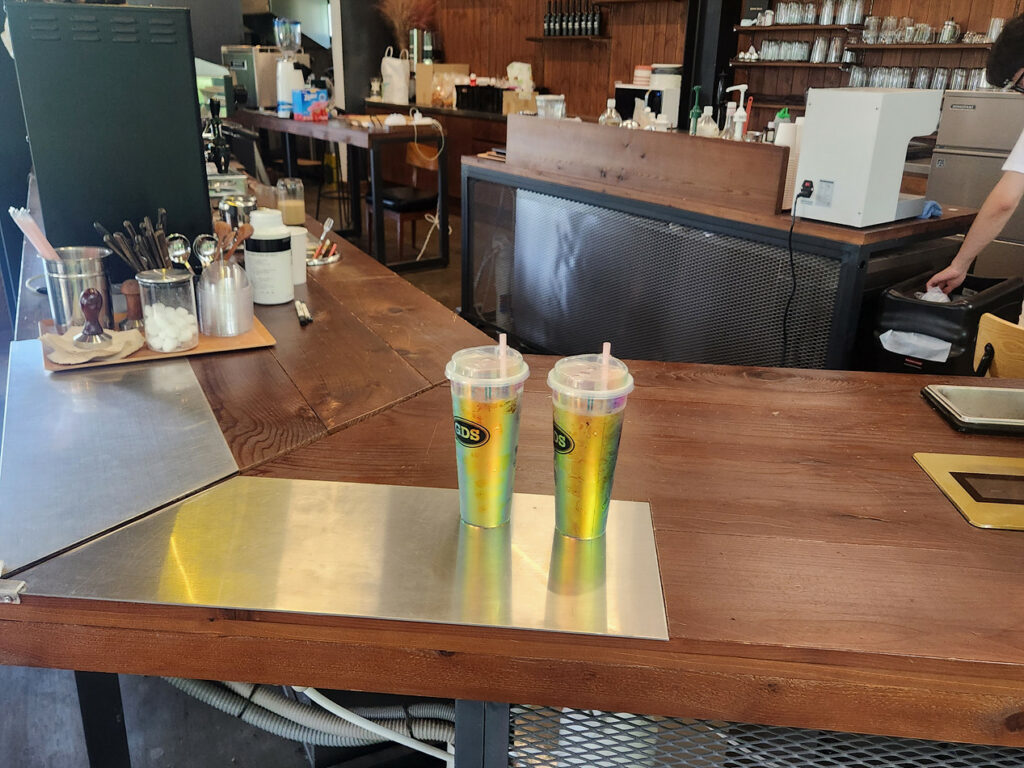
A cup of coffee before getting to work is a must!
The barista served us coffee, and the cup is a work of art!!
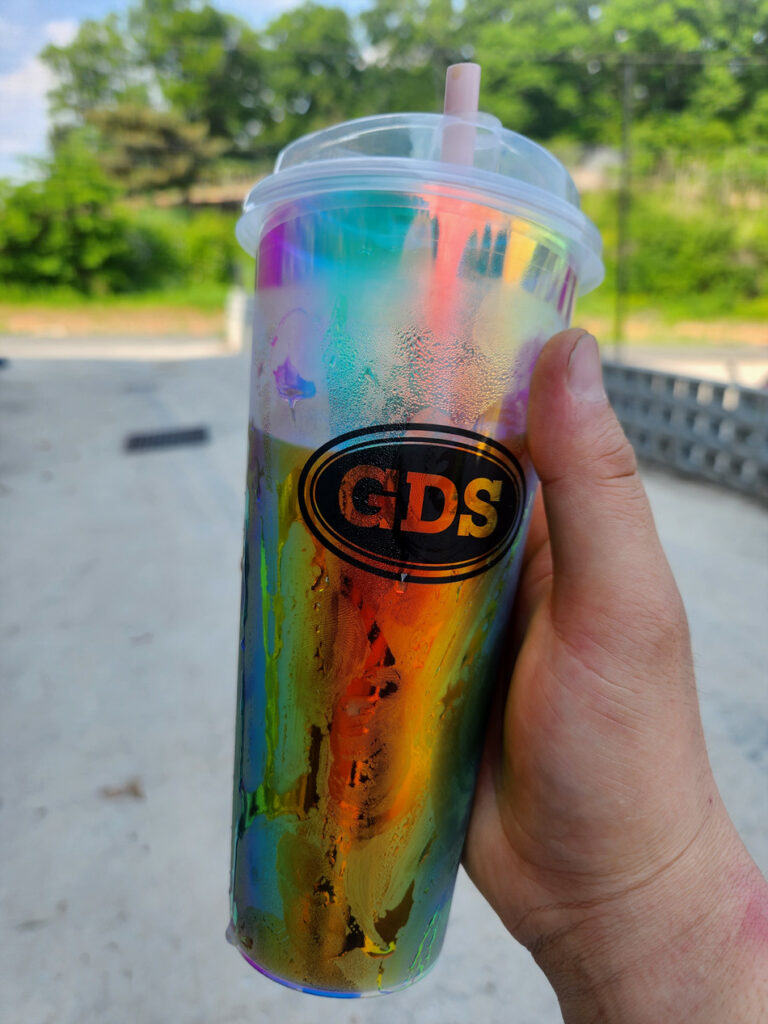
It can also be used as a reusable tumbler, and it honestly made us feel like honored guests.
Whether it’s coffee or tea, what you drink it from matters a great deal, so coffee served in this cup can’t possibly taste bad!
Unlike with other clients, we held several meetings in advance with Coffee Ground’s CEO.
They are currently using a Petroncini 20 kg roaster as their main machine, so the key question was whether our roaster would give the same roasting nuance as that one.
The Petroncini they use now is a model with automated profiling, and they reportedly paid an extra 2000 for the controller alone.
Because that machine uses a horizontal burner, the share of hot-air heating is quite high.
So they said it would be a problem if the roasting nuance changed drastically.
They said they had been very satisfied with the Petroncini in terms of roasting quality.
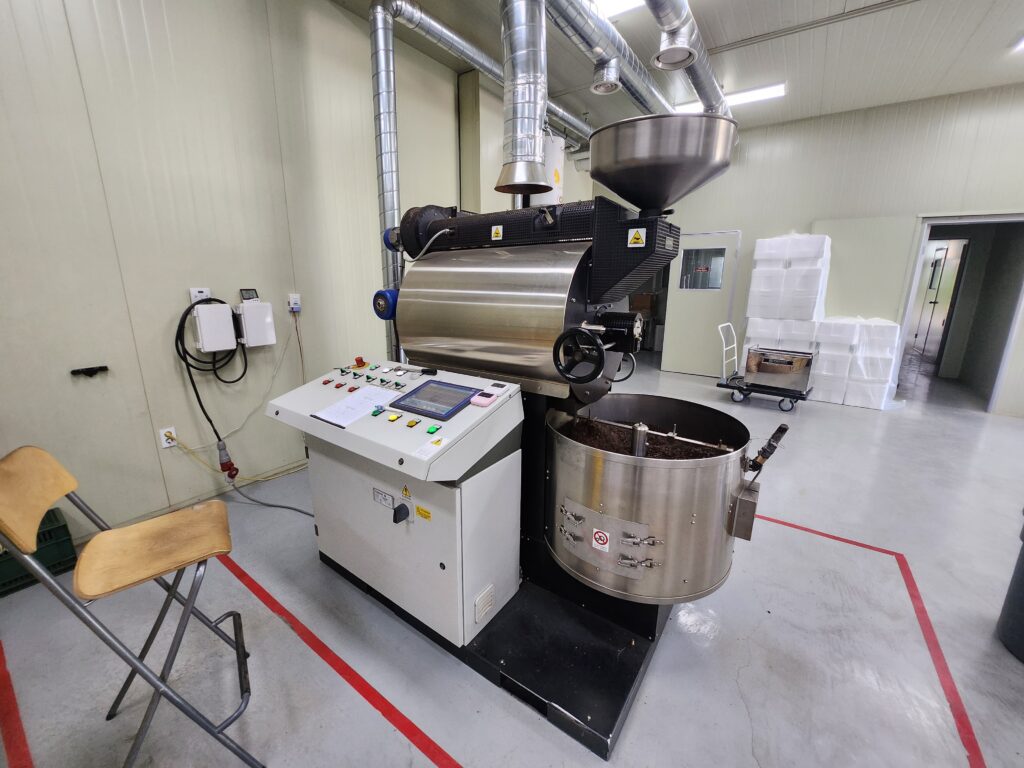
So if the nuance turned out similar, they would move to a large machine all at once, but they decided to install one unit first and decide afterward. We therefore concluded that we would install the 30 kg equipment set first and decide on something larger later.
The equipment originally planned for installation was a 30 kg roaster, a destoner, and a green coffee conveyor.
However, during a pre-installation visit and test, the destoner was cancelled. T_T
The reason was the size of the basket.
It was to be used with the 30 kg roaster, but the basket cannot hold 30 kg at once.
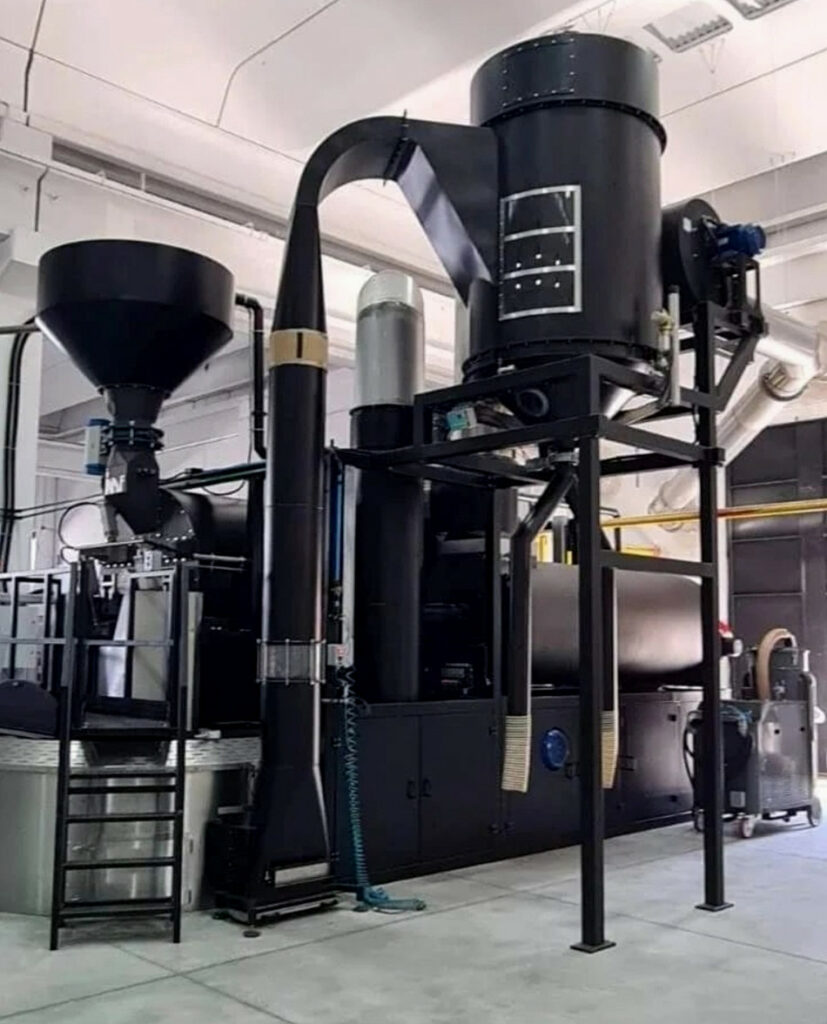
Large machines from other manufacturers often have small baskets as well. The reason is that the beans are suctioned up at the same time as they are discharged.
Even so, it made perfect sense, and we understood.
So we decided to change the destoner’s design and rebuild it with a basket size matched to that roaster’s capacity.
Although it caused a setback, we learned one more thing from this mistake, so we came out ahead.
To build roasters optimized for the wide variety of ways they are used in Korea, we always listen actively to users’ needs with an open mind and reflect those needs in our machines.
After all, that is how SIEBENSTER grows.
So today we are installing the 30 kg roaster and the green coffee conveyor.
The machine is quite large, so we wondered whether a forklift could bring it in all at once, but nothing is impossible.
Korea has seasoned veterans in every field, so we don’t worry.
Thanks to an excellent forklift operator, the 30 kg unit made its entrance with ease!!
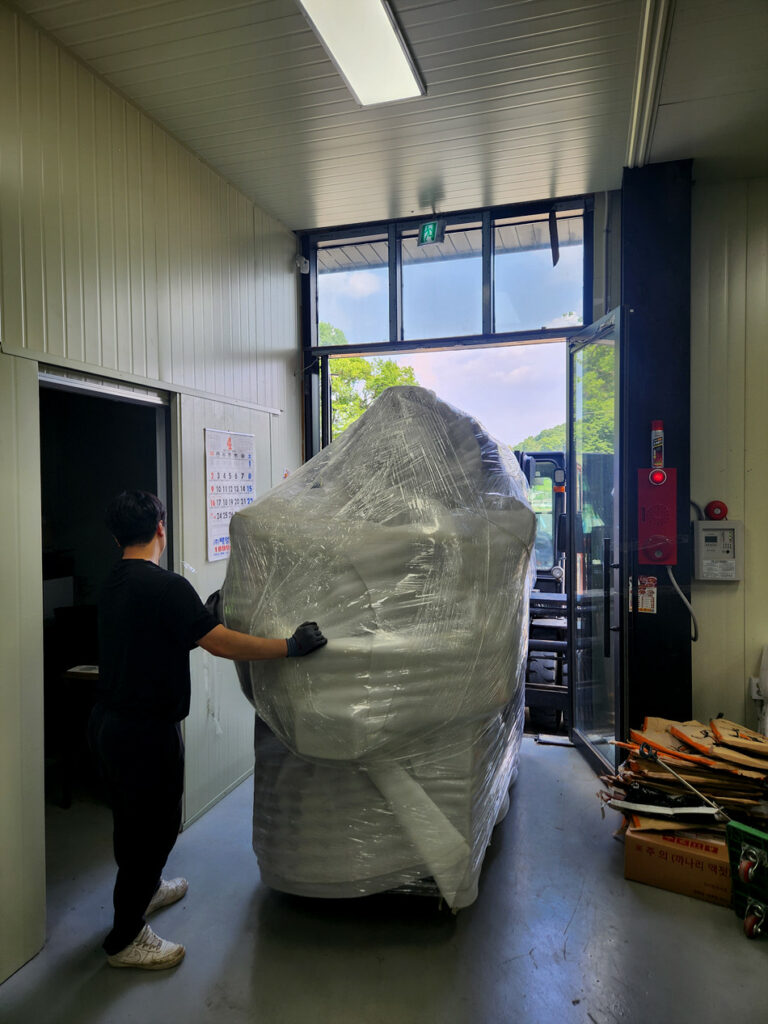
We push it straight in and connect each part.
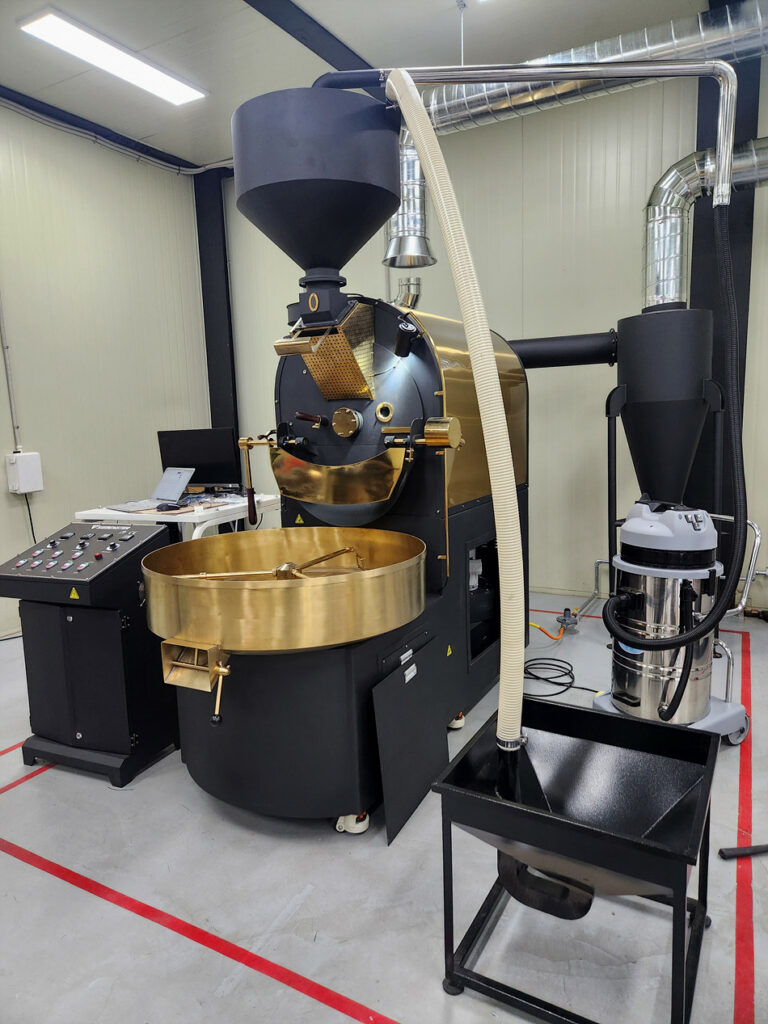
Here is a photo of the finished setup.
The final height is about 2.8 meters.
The green coffee conveyor uses the vacuum cleaner shown in the photo for suction.
We have two types of green coffee conveyors.
One uses a commercial vacuum cleaner, as shown in the photo, and the other is a self-built all-in-one type, as in the photo below.
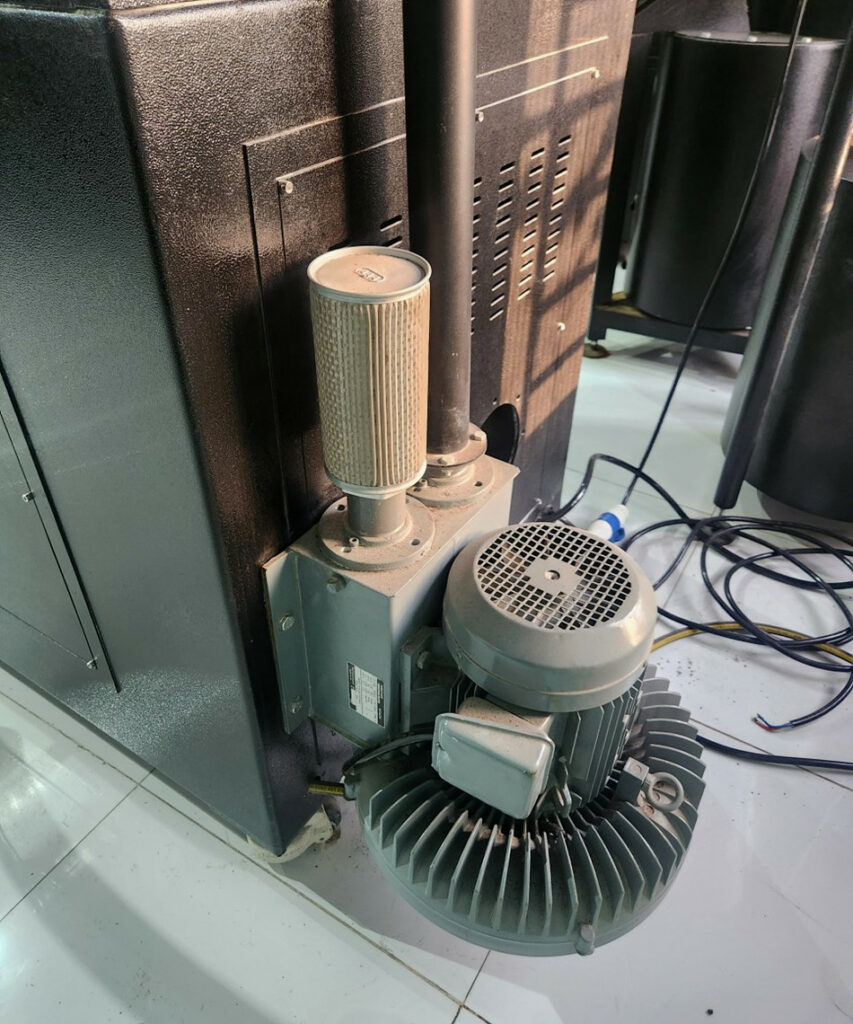
The vacuum cleaner may look a little odd, but there is nothing odd about it. Probat uses one too.
It’s true that when a famous company uses something it looks fine, and when a company with less name value uses it, it looks a bit strange.
The vacuum cleaner may look strange in appearance alone, but it is far better in usability.
Because green coffee is so dusty, the built-in type has to use a filter. However, the finer the filter, the weaker the suction. So we settled on a moderate level, but fine dust that the filter fails to catch drifts into the surroundings.
The vacuum cleaner, on the other hand, has none of those problems. It can be used cleanly, the filter is easy to clean, and the power is strong.
Take a look at the suction video before you go~
It’s powerful.
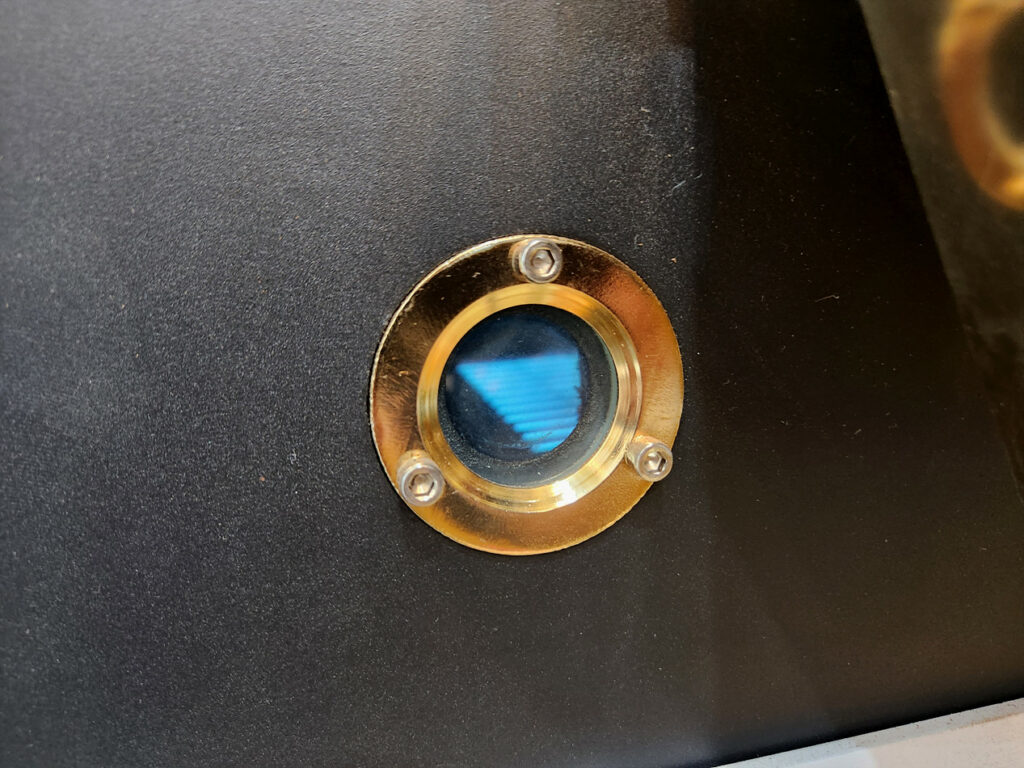
After installation, we run all the tests once more and also re-check for gas leaks, since the machine may have been jolted during transport.
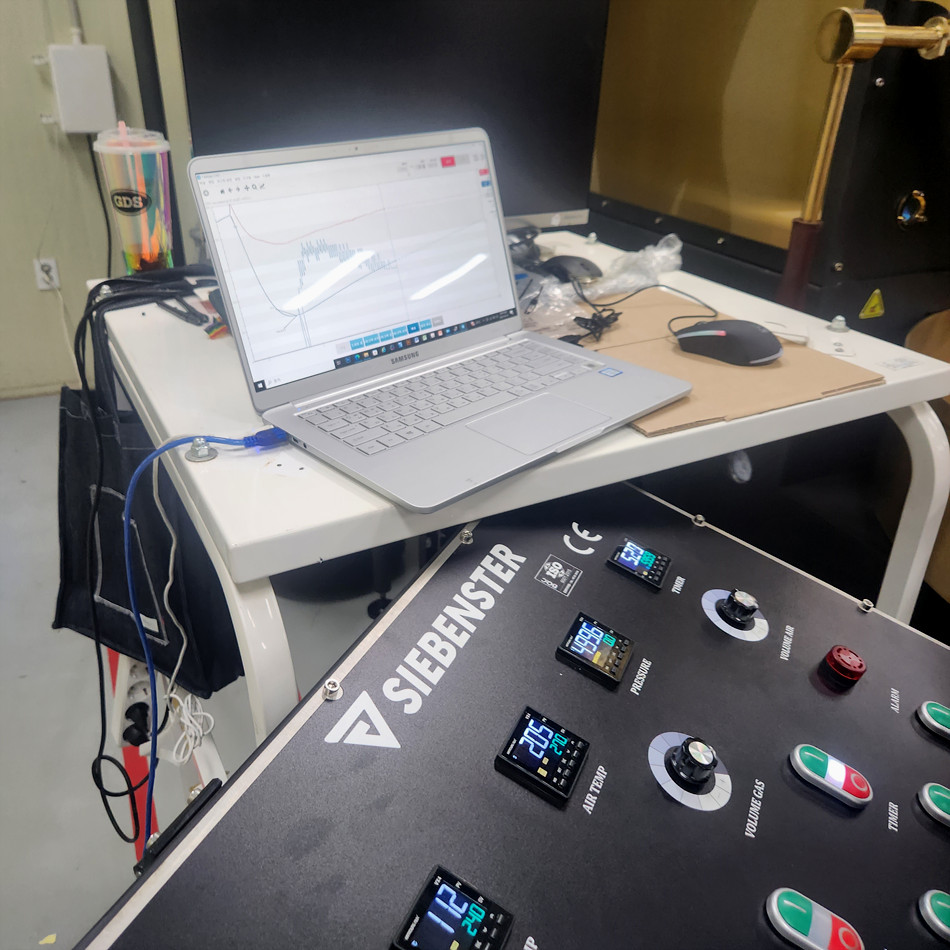
After installation, we returned and carried out a 30 kg roast.
The CEO of Coffee Ground told us that they have matched the roasting nuance quite closely to that of the Petroncini they used before, that they have already begun supplying their customers, and that they are very satisfied, with not a single complaint.
The reason it isn’t much different from the Petroncini, which uses hot air only, is that as the batch size grows, convection inevitably has to play a larger role.
Conduction is a matter of surface area, whereas convection delivers heat from every direction and is a matter of volume, so the larger the machine, the higher the share of convective heat inevitably becomes.
Now on to 60 kg and 120 kg. Let’s go!!!!
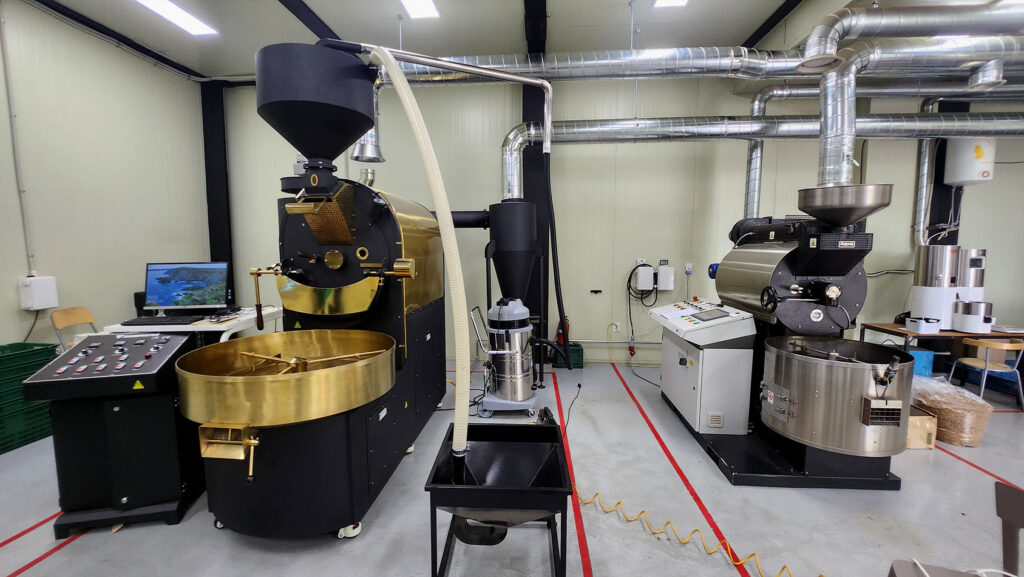
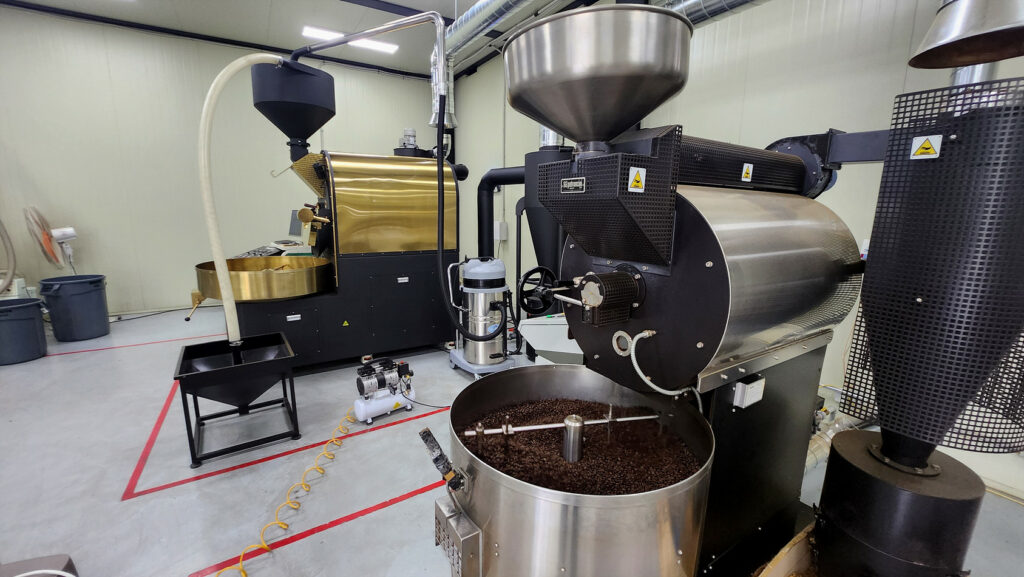
We took a photo of it side by side with the Petroncini 20 kg.
The 20 kg roaster looks tiny, doesn’t it?
SIEBENSTER is large and heavy and, above all, looks far more premium for its price. ^^
It costs less than half the price of the Petroncini 20 kg, so enough said!
So the Petroncini is currently listed for sale on the marketplace.
Anyway, the move up to the bigger machine can happen as soon as this one sells, so would somebody please buy it?
We sell SIEBENSTER roasters, and we’re selling a Petroncini too. Haha
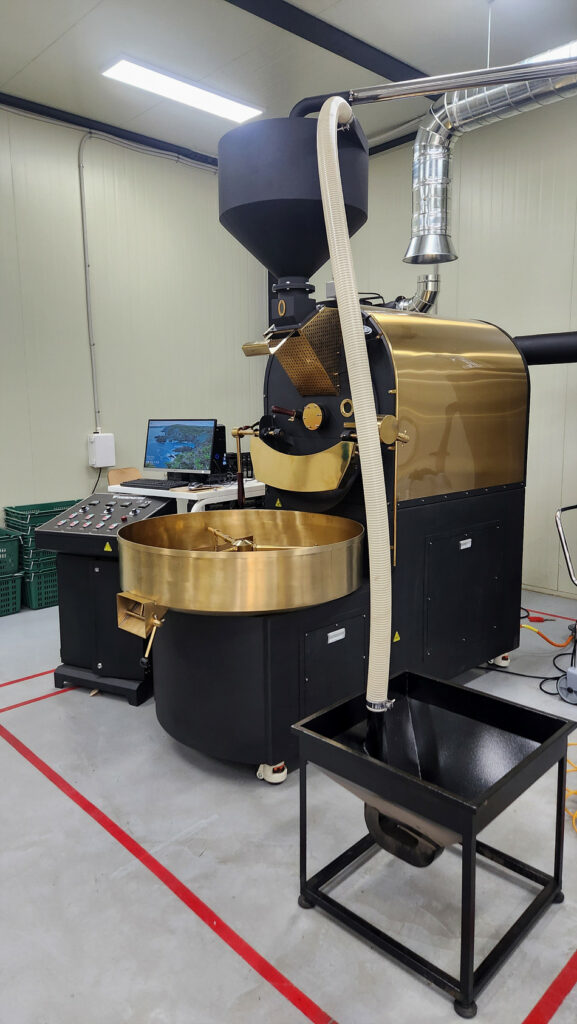
The pipe on the green coffee conveyor in the photo is made of a flexible material, not metal.
Of course, you can choose the pipe type as well. Metal pipes look nice but are not flexible to arrange or move. A flexible material like the one above is less attractive but makes it easy to adjust the length and change the position.
You can choose all of this to suit your own needs.
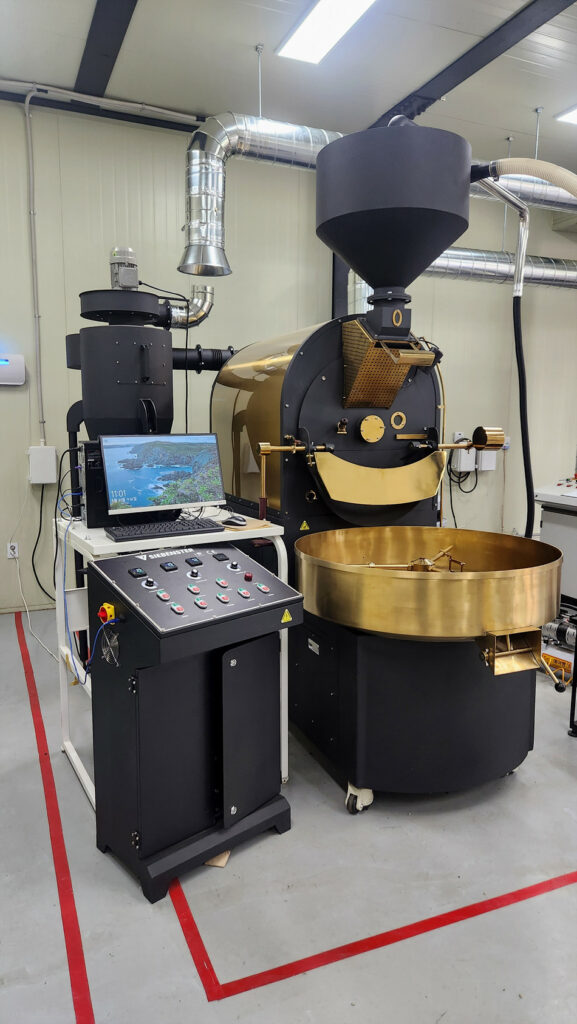
That concludes our report on installing a SIEBENSTER 30 kg roaster.
If you are looking for a reasonably priced cast-iron roaster with good heat retention, choose SIEBENSTER!
Thank you.
No Comments